A car battery should have straight, solid sides. If the case starts looking rounded, swollen, or pushed outward, something inside has changed enough to deform the plastic. The car might still start normally, which can make the problem seem less urgent than it is.
A bulging battery is different from ordinary corrosion around the terminals. Pressure, excessive heat, internal damage, or freezing can physically distort the case. Once that happens, we treat the battery as damaged rather than something to keep using until it finally stops starting the engine.
Excessive Charging Voltage Can Overheat the Battery
The alternator has to keep the battery charged while supplying electricity to the vehicle. If the charging system allows voltage to climb too high, the battery can overcharge.
Excessive charging creates heat and can increase gas production inside a conventional lead-acid battery. If pressure and temperature rise far enough, the case can begin expanding. You may also notice a strong sulfur-like smell, leaking around the battery, or electrical problems elsewhere in the vehicle.
At our shop, we do not replace a swollen battery and stop there. We check charging voltage because a bad alternator or voltage-control problem can damage the replacement battery too.
Extreme Heat Speeds Up Internal Battery Damage
Underhood temperatures can get very high, especially during summer driving, extended idling, or repeated short trips in hot weather. A battery is designed to tolerate engine-bay heat, but excessive temperature speeds up chemical reactions and internal deterioration.
Heat can weaken the case and shorten battery life even when the charging system is working correctly. An older battery that has already lost capacity may be more vulnerable to high temperatures than a newer one.
Things that can accompany heat-related battery damage include:
- A case that looks rounded at the sides
- A strong chemical or sulfur odor
- Wetness around the battery case
- Heavy corrosion near the terminals
- Starting performance that has recently become weaker
- A battery that feels unusually hot after driving
Those signs deserve attention before the battery begins leaking or leaves the vehicle unable to start.
Freezing Can Push the Battery Case Outward
Cold weather can damage a battery too, especially if it's deeply discharged. A properly charged lead-acid battery is much more resistant to freezing than one with very little charge remaining.
If the electrolyte freezes, it expands. That expansion can push outward on the battery case, crack internal components, and permanently distort the housing. After the battery thaws, the sides may remain visibly swollen.
A frozen or previously frozen battery should not simply be charged and returned to service without being checked. Internal plates and separators may already be damaged even if the exterior case did not split open.
Internal Battery Failure Can Create Pressure and Heat
A battery contains plates, electrolyte, separators, and internal connections that must all work together. As a battery ages, those components can deteriorate. Internal shorts or damaged cells can create unusual heat and charging behavior.
Sometimes the first clue is not the bulge itself. The engine may crank slowly, the battery may repeatedly die, or the charging voltage may behave strangely. Other batteries keep starting the vehicle even as their internal condition worsens.
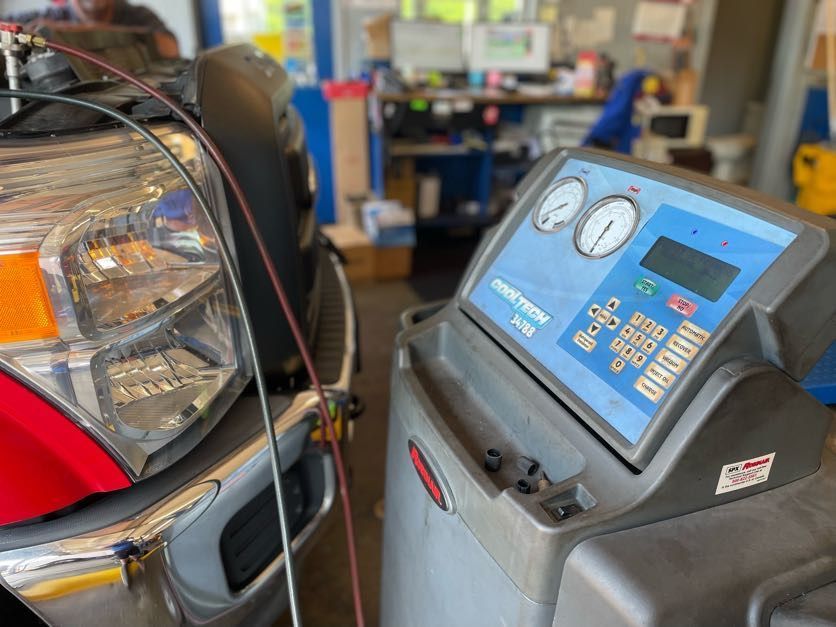
During an inspection, we look at the case, terminals, battery test results, and charging system together. A load or conductance test helps us determine whether the battery can still deliver the current the vehicle needs, but physical swelling is already a strong reason to replace it.
Do Not Keep Driving With a Swollen Battery
A swollen battery case has been physically stressed. Continuing to use it increases the risk of electrolyte leakage, worsening internal damage, or complete starting failure.
Avoid pressing on the case or trying to straighten it. Batteries contain corrosive electrolyte and can produce flammable gases, so damaged cases need careful handling. If you notice a strong sulfur smell, visible leakage, smoke, or unusual heat around the battery, stop using the vehicle and have the system checked promptly.
When Does the Battery Need Replacement?
If the battery case is genuinely swollen or distorted, replacement is generally the correct next step. The bigger question is what caused the swelling.
We check alternator output, charging voltage, cable condition, battery mounting, and electrical system operation before installing the new battery. If overcharging caused the original failure, we must correct that problem first. If the battery froze because it stayed discharged, we also want to know why it lost its charge.
Replacing the battery fixes the immediate issue. Finding the cause helps keep the new one from ending up in the same condition.
Get Car Battery Service In Ohio, With Jamie's Tire & Service
If your battery looks swollen, smells unusual, is leaking, or has started giving you starting problems, Jamie's Tire & Service can test the battery and charging system at any of our 7 locations.
Schedule a battery check before a bulging case turns into a leak, no-start, or repeat battery failure.
- Jamie's Tire & Service Beavercreek, 2276 Grange Hall Road, Beavercreek
- Jamie's Express, 1276 Sterling Court, Fairborn
- Jamie's Tire & Service Xenia, 213 West Main Street, Xenia, OH 45385
- Jamie's Tire & Service Kettering, 3050 Woodman Drive, Kettering, OH
- Jamie's Tire & Service Fairborn, 31 South Broad Street, Fairborn, OH
- Jamie's Tire & Service Northtown, 4220 North Main Street, Dayton, OH
- Jamie's Tire & Service Northridge, 6104 North Dixie Drive, Dayton, OH