A tire looks round until you notice a raised patch on the sidewall or feel a thump with every wheel rotation. Sometimes the change follows a pothole hit. Other times, the car has simply been sitting for a few days. Those situations need different responses.
A bulge, a temporary flat spot, and uneven tread wear aren't interchangeable descriptions. Where the shape has changed helps determine whether the tire needs immediate replacement or a closer check for wear and mechanical trouble.
A Tire Sidewall Bulge Means the Structure Is Damaged
The cords inside a tire support its shape under pressure and load. A hard impact traps the sidewall between the road obstacle and the wheel, sometimes breaking those cords without leaving an obvious cut outside. Air then pushes against the weakened area, creating an outward bubble or bulge.
A structural sidewall bulge isn't a puncture that can be patched. The damaged tire needs replacement. Stop using it and arrange a safe spare-tire change or recovery according to the vehicle's instructions. Don't stand beside traffic to inspect it, and don't treat a small bubble as safe because the pressure reading still looks normal.
Sidewall Indentations Are Different From Outward Bulges
Some radial tires have a shallow inward indentation where internal body cords overlap. That manufacturing feature is different from rubber swelling outward over damaged reinforcement. Lighting and wheel position sometimes make the distinction difficult to see during a quick walk around the car.
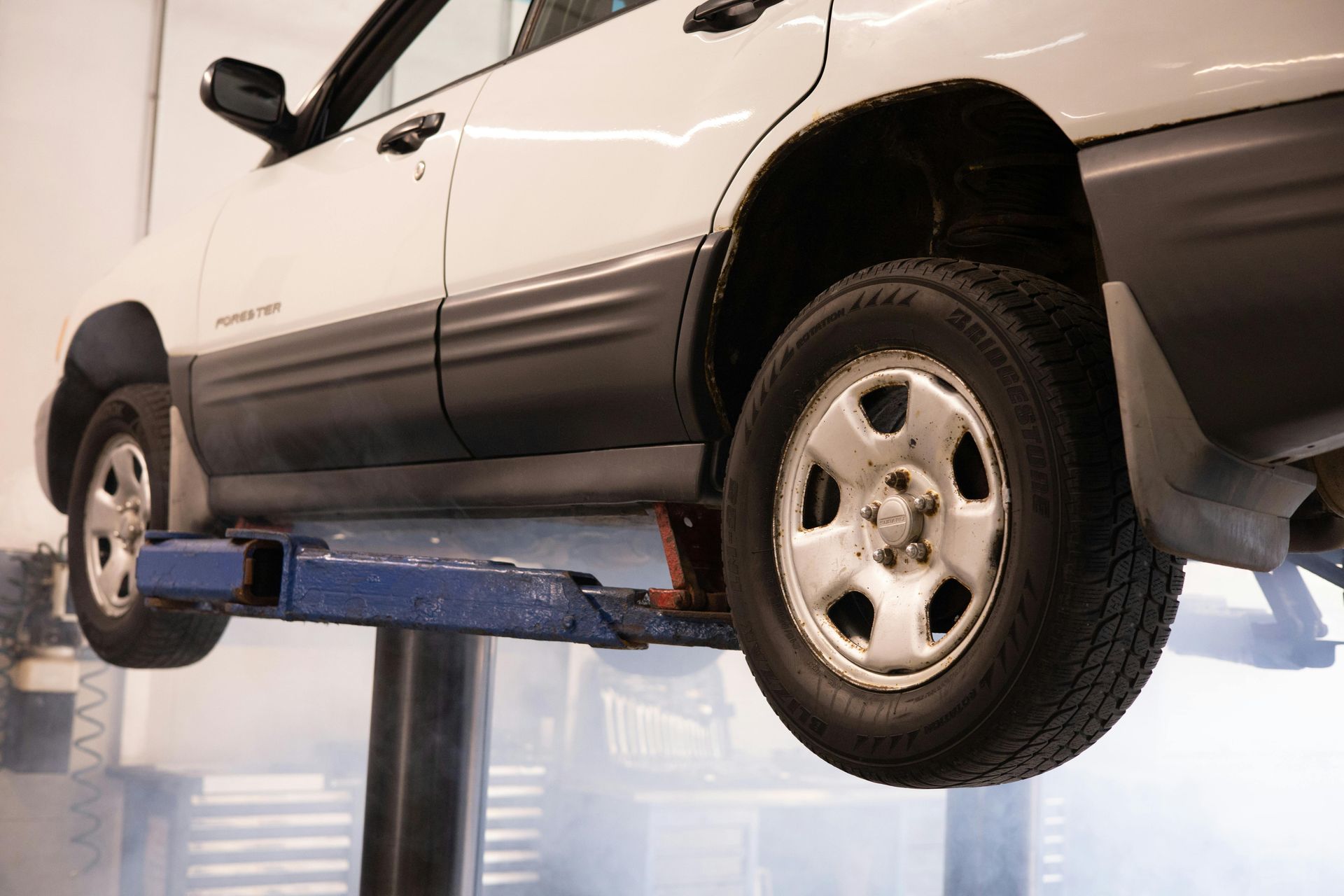
If the shape is new or uncertain, have it checked before another highway drive. Describe whether it appeared after an impact and whether there's vibration or pressure loss. The wheel also needs inspection after a severe hit, since a bent rim or sharp edge may have been damaged at the same time.
A Parked Tire Can Develop a Temporary Flat Spot
The portion of a tire supporting the vehicle's weight stays compressed while parked. After storage, especially in cooler conditions, that area may take time to return to its normal shape. The first part of a drive may bring a vibration or thump that fades as the tire flexes and warms.
Persistent vibration needs checking. A pronounced flat area from a locked-wheel skid, damaged internal structure, or prolonged poor storage is a different concern from temporary parking-related flat spotting. Don't keep driving to warm a tire that has a bulge, visible damage, or severe shaking. Those signs mean you should stop safely and have it inspected.
Uneven Tread Changes the Way a Tire Rolls
Wear sometimes makes a tire feel out of round even though the sidewall looks normal. Cupped tread has alternating high and low areas that hit the road unevenly. A worn patch, separated tread, or internal belt problem produces a different kind of disturbance and needs its own evaluation.
Shocks, struts, loose steering joints, wheel damage, and imbalance all enter the inspection when the tread pattern points that way. Balancing corrects uneven weight distribution. It won't repair broken internal tire structure or restore rubber already worn away. A tire can be balanced and still be unfit to use.
Tire Pressure and Load Affect Tire Damage
An underinflated tire flexes more under the vehicle's weight. That extra movement builds heat and leaves the sidewall less protected against impacts. Overloading also asks more of the tire than its design allows. Follow the vehicle placard and loading instructions, and check pressure when the tires are cold.
When arranging a tire inspection, describe:
- Any pothole, curb, or road-debris impact
- Whether the vibration began after parking or while driving
- Pressure loss or a recent low-pressure warning
- Where the changed shape appears
- Any heavy load carried before the problem started
The inside shoulder should be checked too. A tire that looks healthy from beside the car may have damage or heavy wear on the hidden edge.
A Tire Shape Problem Needs More Than New Rubber
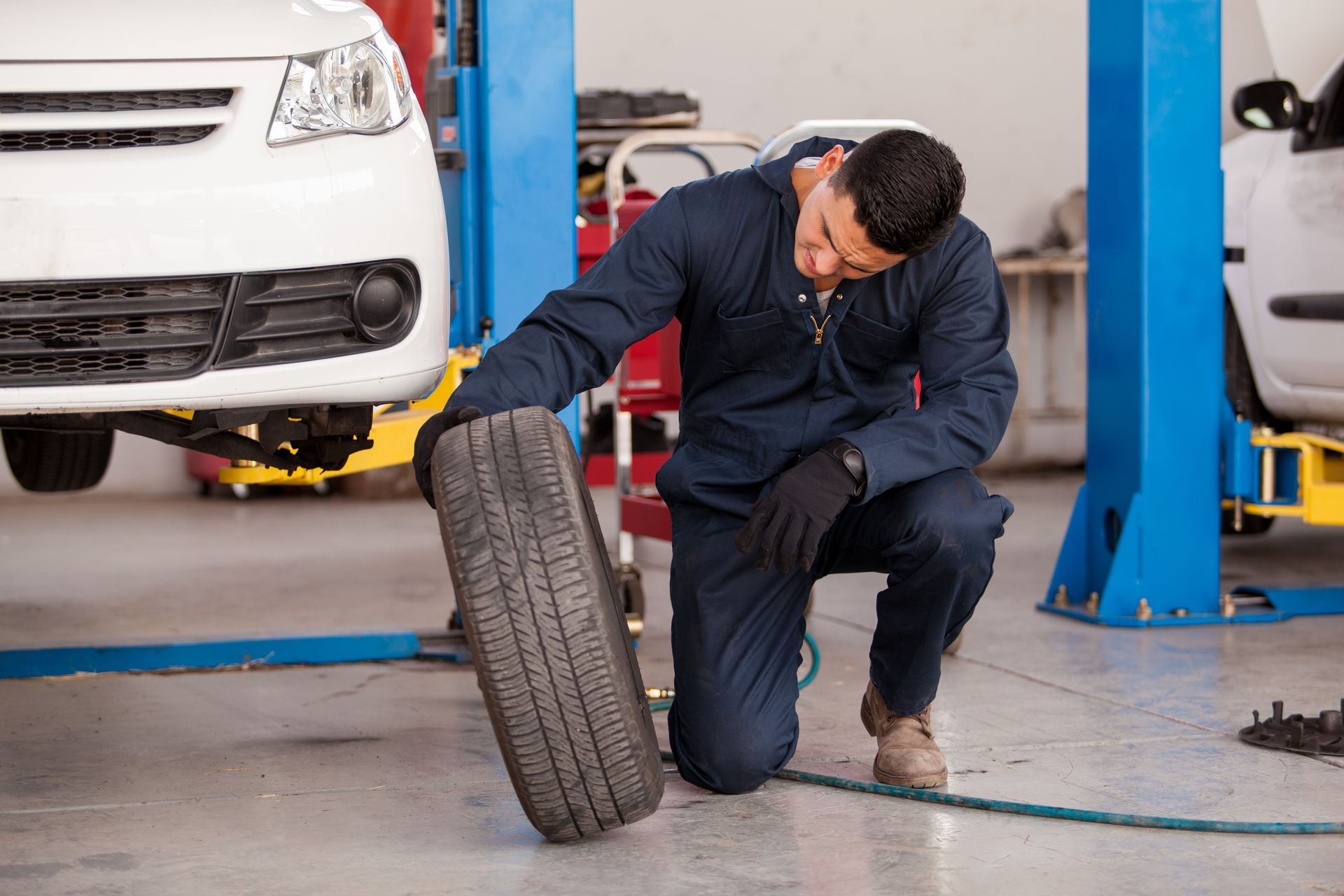
Replacement solves the immediate problem when the tire is damaged beyond repair. The inspection should also check the wheel and look for the cause of unusual wear. Otherwise, a loose ball joint, weak strut, or incorrect alignment continues to work on the replacement tire.
For vehicles with tire-matching requirements, particularly some AWD models, the other tires need measuring before deciding how many to replace. The right replacement plan follows the vehicle manufacturer's limits and the condition of the existing set.
Get Tire Inspection and Replacement With Jamie's Tire & Service
Jamie's Tire & Service has 7 locations in Ohio:
- Beavercreek: 2276 Grange Hall Road
- Jamie's Express in Fairborn: 1276 Sterling Court
- Xenia: 213 West Main Street
- Kettering: 3050 Woodman Drive
- Fairborn: 31 South Broad Street
- Northtown in Dayton: 4220 North Main Street
- Northridge in Dayton: 6104 North Dixie Drive