Understanding the importance of regular tire pressure checks for your car
How and When to Check Tire Pressure in Dayton, Ohio
One often overlooked aspect of tire maintenance is setting the correct tire pressure. Tires rely on proper inflation to maintain proper traction for acceleration and braking, and keeping them at the recommended level also helps them to wear evenly. Many cars are equipped with a Tire Pressure Monitoring System, which alerts drivers to the inflation level of the tires, but older vehicles often do not have this feature. In this article, we’ll discuss how to find your vehicle’s recommended tire pressure, how to check it, and what you can do to get it filled to the proper level.
Why Tires Lose Air Pressure
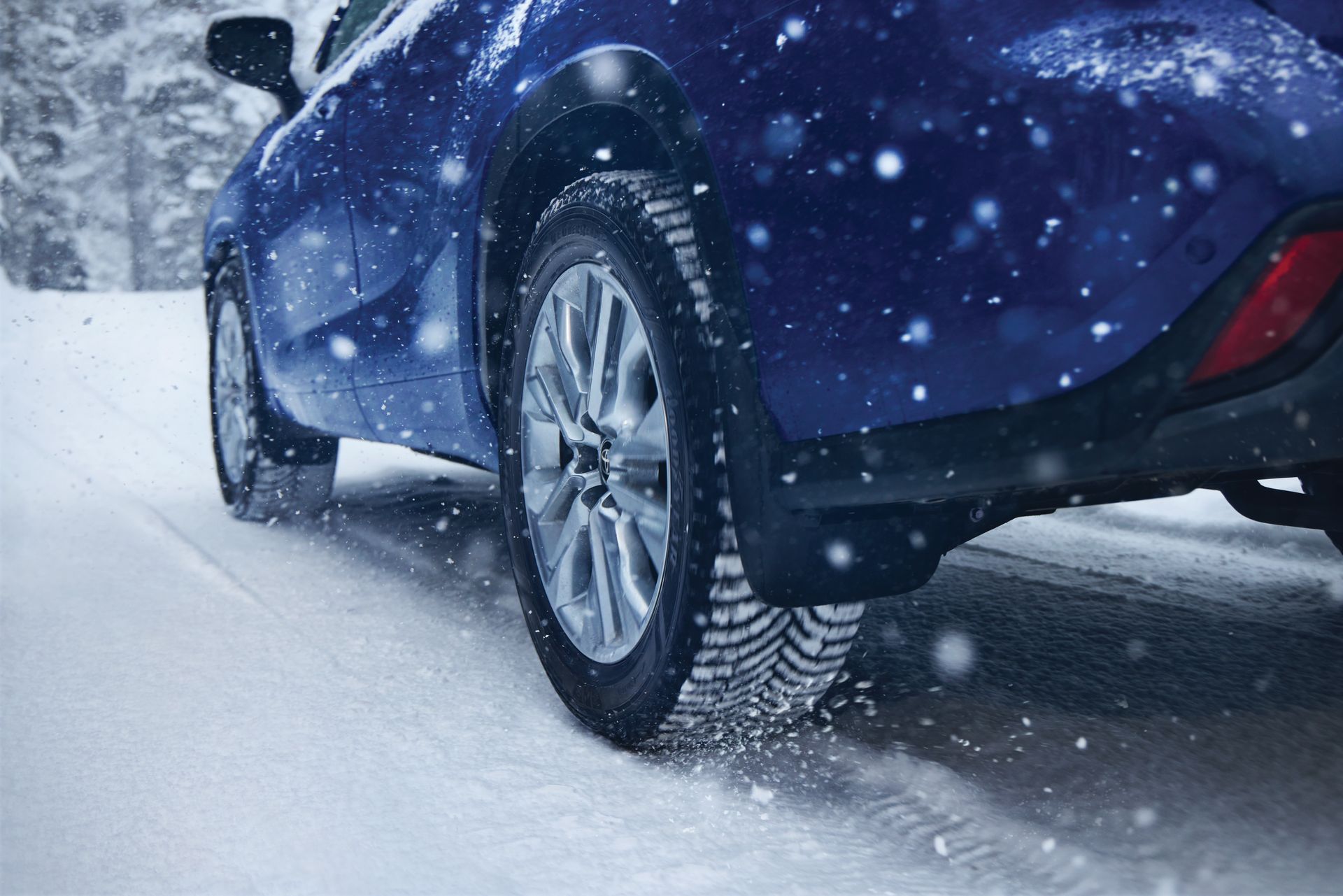
Tires naturally lose some pressure over time, either due to leaks or natural pressure loss through the walls and seals of the tire. It is considered normal for a tire to lose up to a pound of pressure a month, but anything more than that could be due to a leak or excessive age. If you notice your tires losing more pressure than this, there may be a puncture in the tread or a leak from the bead seal or valve stem. Tires can also lose pressure due to temperature changes. As temperatures drop, you can expect to lose about a pound of pressure for every 10 degrees of temperature change. This is why on cold mornings, you often see your TPMS light turn on.
How to Check Tire Pressure
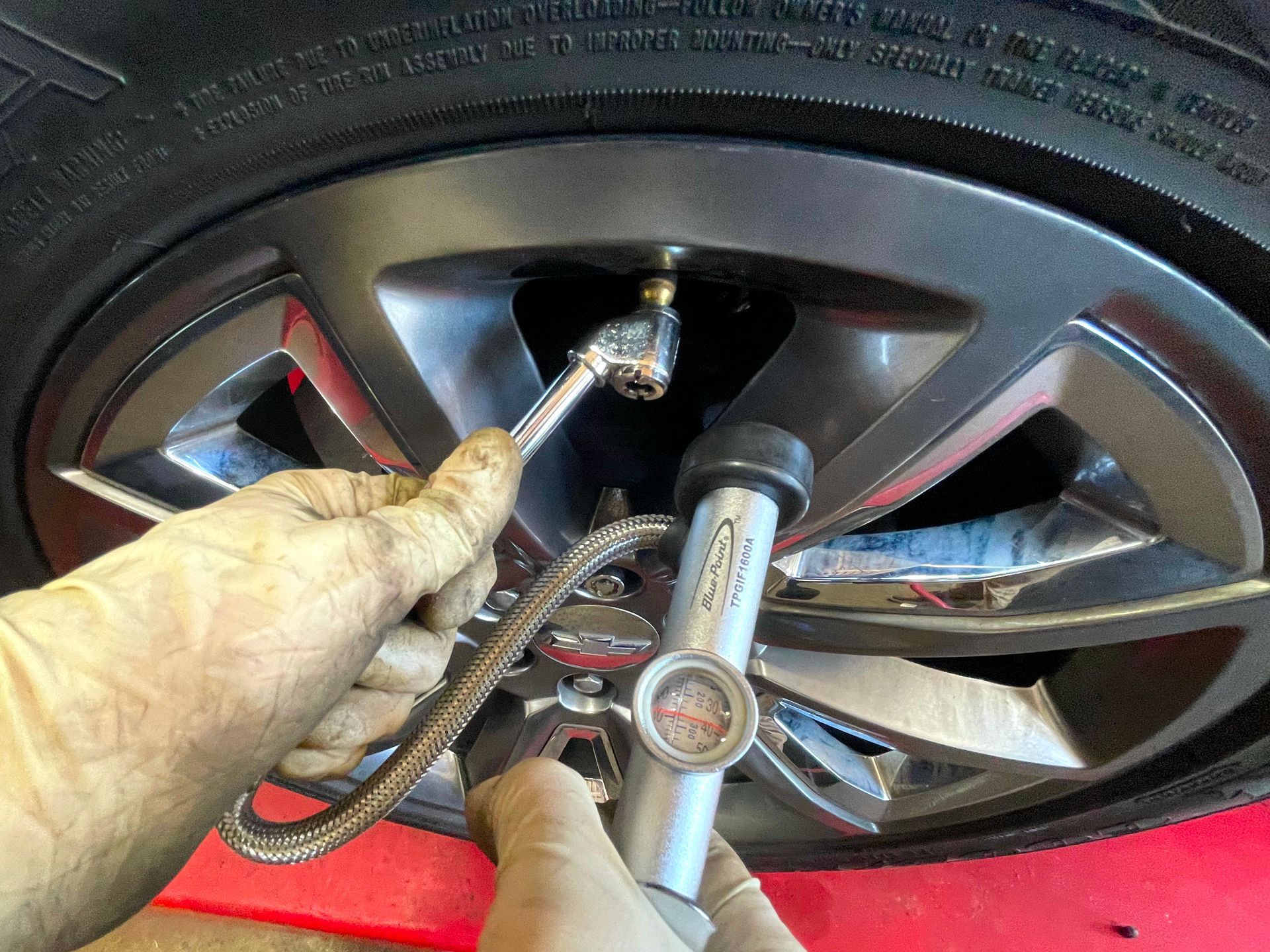
Checking your tire pressure is simple with the right tools. All you need is a tire pressure gauge, either a digital one or a mechanical one. To check tire pressure, you should:
- Remove the valve cap from the valve stem.
- Press the tire gauge onto the tip of the valve stem.
- After the valve is depressed, your gauge should read the current pressure in the tire.
- Once you’re done, just remove the pressure gauge and replace the valve cap.
How to find out what your tire pressure should be set to
Most vehicles have the recommended tire pressure listed on a placard inside the driver-side door. This placard also has other useful information, like the factory tire size, speed rating of the tires, and other vehicle information. Under the “Cold Tire Pressure” column, you’ll find the appropriate tire pressure listed in both kPa and PSI. In the US, we use PSI, or pounds per square inch, to measure tire pressure. Most vehicles require pressure between 32 and 40 PSI, but some performance or heavy-duty vehicles need more.
How to add air to your tires
If your tire pressure is low, there are several different places where you can have air added to them. If you do not have a portable air compressor, most gas stations will have a tire pressure machine you can pay to use. Many auto repair and tire shops (including Jamie's Tire & Service) will also provide free tire pressure checks and air up your tires for free.
To add air to your tires, you’ll follow a similar process to checking the pressure.
- Remove the valve cap from the valve stem.
- Push the hose fitting onto the end of the valve stem.
- When the hose is properly compressed on the valve stem, you’ll hear a hissing noise as air goes into the tire.
- If the tire pressure machine does not have a gauge built in, you should hold it on the valve stem for several seconds and then check the tire pressure with your gauge.
- Once your tire is at the level recommended by the placard, replace the valve cap.
How often should you check tire pressure?
It’s a good idea to check your tire pressure once a month. With modern TPMS systems that alert us when tires are low, it’s not as important to physically check the tire pressure, since your vehicle’s computer system is constantly monitoring them, but having the pressure checked regularly will not hurt!
Why do tires need to have the right pressure?
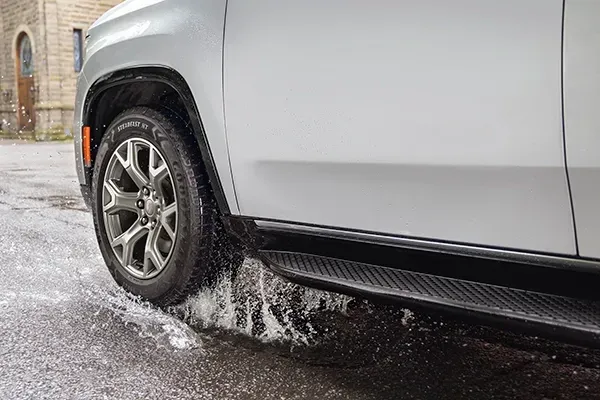
Tire pressure affects the contact patch between the tire and the road. Tire pressure that is too high or too low will reduce your tire’s traction, and make it difficult to stop quickly. Incorrect tire pressure also causes uneven tire wear, either on the center or on the edges of the tread. Keeping your tire pressure at the correct level will help you get more miles out of your tires, saving you money over time. Tire pressure can also affect gas mileage, and keeping it at the right level will help reduce what you spend on fuel.
Need your tire pressure checked? Come to the pros at Jamie’s Tire in Dayton, Ohio
If you think your tires or low or have a TPMS light on your dash, the technicians at Jamie’s Tire & Service would be happy to check your tire pressure for free. If the tires are losing air, we can also inspect them and check for punctures or leaks. Don’t let low tire pressure cause you to lose traction and experience premature tire wear! Give the pros at Jamie’s Tire & Service a call. Our full-service tire centers in Fairborn, Beavercreek, Xenia, Kettering and Dayton are here to help!
Call or schedule a visit at one of our Ohio locations:
- Jamie's Tire & Service Beavercreek, 2276 Grange Hall Road, Beavercreek
- Jamie's Express, 1276 Sterling Court, Fairborn
- Jamie's Tire & Service Xenia, 213 West Main Street, Xenia, OH 45385
- Jamie's Tire & Service Kettering, 3050 Woodman Drive, Kettering, OH
- Jamie's Tire & Service Fairborn, 31 South Broad Street, Fairborn, OH
- Jamie's Tire & Service Northtown, 4220 North Main Street, Dayton, OH
- Jamie's Tire & Service Northridge, 6104 North Dixie Drive, Dayton, OH